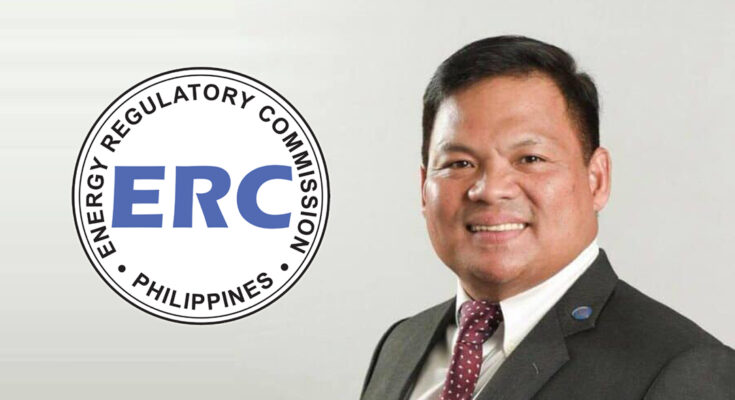
Energy Regulatory Commission (ERC) Chairperson Atty. Francis Saturnino C. Juan has defended the agency’s regulatory stance after the Power for People (P4P) Coalition accused the Commission of “ceding ground to power players” at the expense of consumers.
In a statement issued September 25, Juan directly addressed P4P’s September 19 press release, where Convenor Gerry Arances criticized the ERC for allegedly enabling power companies to raise electricity prices unchecked.
Juan clarified that protecting consumers remains central to the ERC’s mandate, but emphasized that this responsibility must be exercised within the framework of the Electric Power Industry Reform Act (EPIRA), the Department of Energy’s Competitive Selection Process (CSP) Policy, and the Supreme Court’s ruling in Alyansa ng Bagong Pilipinas vs. ERC.
“We are entering a new era, characterized by two pivotal developments… These are not merely procedural changes; rather, they represent a significant transformation, a compelling call to re-embrace the competitive principles that are fundamental to EPIRA,” Juan said.
According to Juan, the ERC’s role has not been diminished but “transformed” into that of a “guardian of the competitive process and guarantor of its integrity.” He explained that once a CSP is conducted transparently and fairly, the resulting price should be respected as the “market’s definitive answer” to what constitutes the least-cost power.
Juan warned that second-guessing competitively derived prices during Power Supply Agreement (PSA) reviews could undermine investor confidence, discourage badly needed energy investments, and ultimately harm consumers.
“It creates regulatory uncertainty that discourages the very investment we need. It tells investors: ‘You competed and won fairly, but the goalposts may still move.’ This does not protect consumers; it ultimately harms them,” Juan said.
Still, the ERC chief stressed that the Commission will not rubber-stamp contracts. Instead, it will rigorously ensure that CSP processes are truly competitive, scrutinize the prudence of costs, and guard against anti-competitive practices.
Juan also addressed consumer groups directly, saying the best protection against high prices lies not in arbitrary regulatory intervention but in sustained market competition.
“The greatest shield against high prices is not the discretionary power of a regulator to cut a single contract, but the relentless, ongoing pressure of a competitive market where suppliers must constantly offer their best price,” he said.
Concluding his statement, Juan reaffirmed the ERC’s commitment to balance consumer welfare and investor confidence:
“Let the ERC be the steadfast guardian of the competitive process. Let it validate the integrity of the auction, and then let it uphold the results. In doing so, we will secure a future of affordable, reliable, and sustainable power for all Filipinos.”
The P4P Coalition, a national network of civic groups advocating for clean and affordable energy, has yet to issue a response to Juan’s remarks.