San Diego, California — As power systems around the world undergo rapid change, Philippine distribution utility MORE Power, together with its parent company Primelectric, is looking beyond traditional solutions to prepare for the future of electricity service.
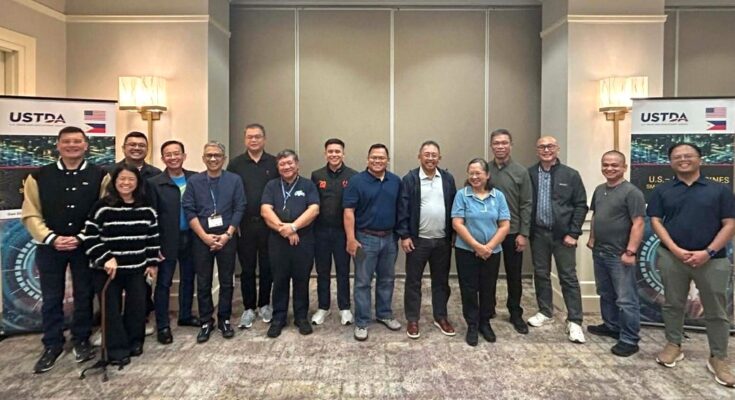
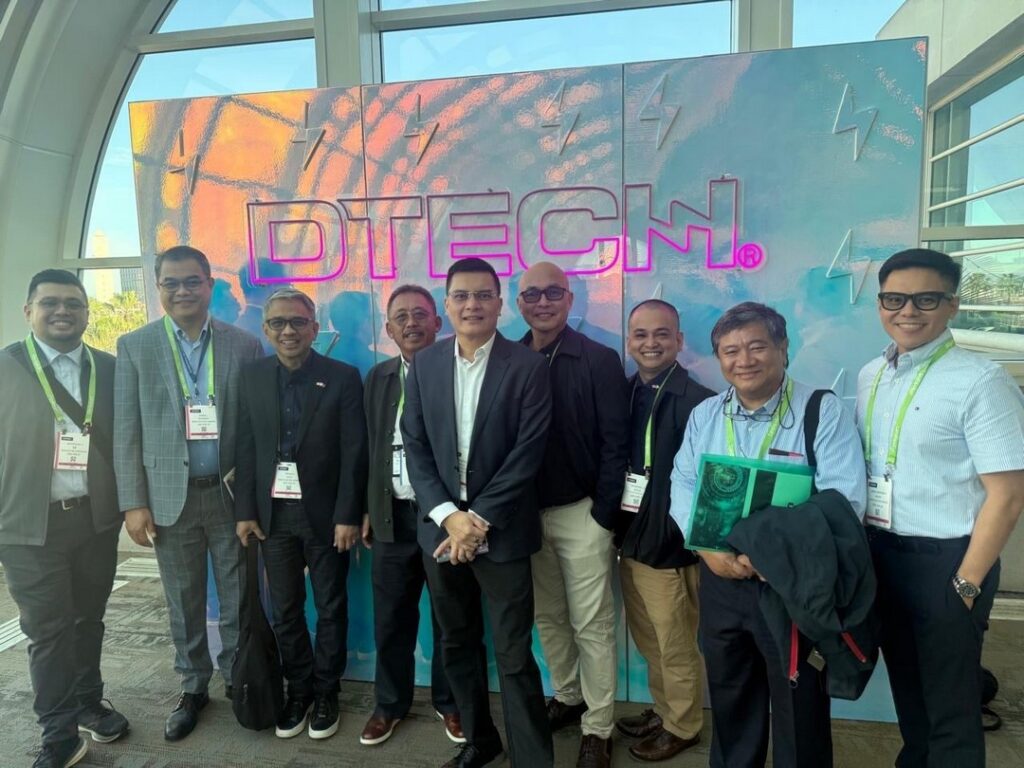
This was the focus of Primelectric President and Chief Executive Officer Roel Z. Castro as he led the MORE Power–Primelectric delegation to the ongoing Distribution Technology Conference and Exhibit (DTECH) held in San Diego, California. The Philippine delegation also included representatives from the Department of Energy (DOE), Energy Regulatory Commission (ERC) and representatives from the private distribution utilities around the country.
“The delegation, hosted by the U.S. Trade and Development Agency (USTDA), attended the DTECH Conference which brought together electric utilities, regulators, and technology providers mostly from the United States of America to discuss how new technologies are reshaping power distribution systems—particularly at the local or “last-mile” level that directly serves households and businesses.”
“We are grateful to USTDA for inviting us to this conference and for allowing us to learn from global experiences,” Castro said. “This platform allows us to see how emerging technologies, policies, and regulations are coming together in more advanced power systems.”
Making Sense of a Changing Power Grid
For many consumers, electricity still feels like a simple one-way service: power flows from a utility to homes and businesses. But Castro explained that this model is rapidly changing.
“Customers are no longer just consumers of electricity,” he said. “They are becoming ‘prosumers’—people who both use and generate power, such as households with rooftop solar panels.”
These developments are known collectively as Distributed Energy Resources (DERs). They include solar panels, battery storage systems, and electric vehicles that can either draw power from the grid or supply power back to it. While these technologies open new opportunities, they also bring new technical and safety challenges.
“At the conference, we looked closely at how utilities integrate these resources into the distribution network while keeping the system reliable and safe,” Castro said. “Two-way power flows require new equipment, smarter monitoring, and updated safety standards.”
Reliability and Safety Come First
One of the key themes discussed at DTEC was how to maintain reliable electricity service as grids become more complex. With power now flowing in multiple directions, utilities must adopt advanced digital tools and modern equipment to monitor conditions in real time and prevent outages.
“Reliability and safety remain non-negotiable,” Castro emphasized. “New technologies must help us detect problems earlier, respond faster, and protect both our workers and our customers.”
The conference highlighted best practices such as improved protection systems, islanding measures—which prevent solar systems from feeding power into lines during outages—and updated maintenance protocols suited for modern grids.
Learning from Policy and Regulation
Beyond technology, the delegation also examined how U.S. policies and regulations are evolving to support these changes. Sessions explored how regulators balance innovation with consumer protection and grid stability.
“There is a strong lesson here about alignment,” Castro said. “Technology cannot move forward without the right policies, and policies must be grounded in technical realities.”
Representatives from the Philippine DOE and ERC participated in these discussions, gaining insights that could help shape local frameworks as more Filipinos adopt solar energy, electric vehicles, and other new technologies.
Opportunities for Consumers and Utilities
The rise of prosumers also creates economic opportunities. Homeowners with solar panels can sell excess electricity back to the grid, while businesses can participate in programs that reward them for adjusting their energy use during peak hours.
“This changes how utilities think about pricing, billing, and customer engagement,” Castro said. “It’s no longer just about selling kilowatt-hours. It’s about enabling participation and creating value for everyone involved.”
Collaboration Is Key
A consistent message throughout the conference was the importance of collaboration—among utilities, regulators, technology providers, and even across countries.
“No single organization can do this alone,” Castro said. “Continuous learning, pilot projects, and shared experiences are essential if we want to modernize our power systems responsibly.”
As MORE Power and Primelectric Holdings bring these lessons back to the Philippines, Castro stressed that the goal is clear: to build a distribution system that is safe, reliable, and ready for the future.
“The energy landscape is changing,” he said. “By learning early and adapting thoughtfully, we can ensure that our customers benefit from new technologies without compromising the quality of service they expect.”