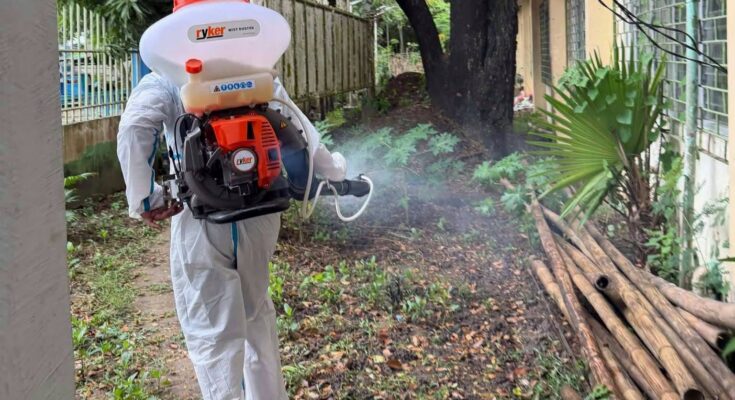
The Iloilo City Government is intensifying its dengue prevention and control measures following a 37.7% increase in cases compared to the same period last year, with health officials warning residents that the risk of infection remains even during hot and dry weather.
The City Health Office (CHO) recorded 785 dengue cases and eight fatalities in Iloilo City from January 4 to October 31, 2026, higher than the figures recorded during the corresponding period in 2025.
Dr. Roland Jay Fortuna, assistant city health officer, said the rising number of cases highlights the need for continued vigilance, particularly as the city experiences warmer temperatures associated with El Niño.
Fortuna explained that dengue-carrying mosquitoes can remain active during hot weather and may become more aggressive in biting under high temperatures. He emphasized that dengue prevention should not be limited to the rainy season.
To contain the spread of the disease, the CHO continues to monitor barangays reporting dengue cases, conduct misting operations, distribute and apply larvicides, and activate Barangay Dengue Task Forces.
Mayor Raisa S. Treñas has also directed the CHO and barangay officials to strengthen preventive measures, including regular community clean-up activities.
“We continue to strengthen our dengue prevention efforts in Iloilo City. May mga kaso kita sang dengue sa Iloilo City, gani importante nga aware kita kag maghalong,” Treñas said.
The mayor urged residents to regularly clean their surroundings and eliminate stagnant water that could serve as breeding grounds for mosquitoes.
She also reminded the public to watch out for dengue symptoms, including high fever, headache, body pain, vomiting and skin rashes, and seek medical consultation immediately if these occur.
Treñas said the city’s district health centers offer Dengue Fast Lanes and free dengue testing services to help residents access timely diagnosis and medical attention.
The city government continues to call on communities to take an active role in dengue prevention, stressing that regular household and neighborhood clean-ups, early detection and prompt medical consultation are essential in reducing infections and preventing further fatalities.