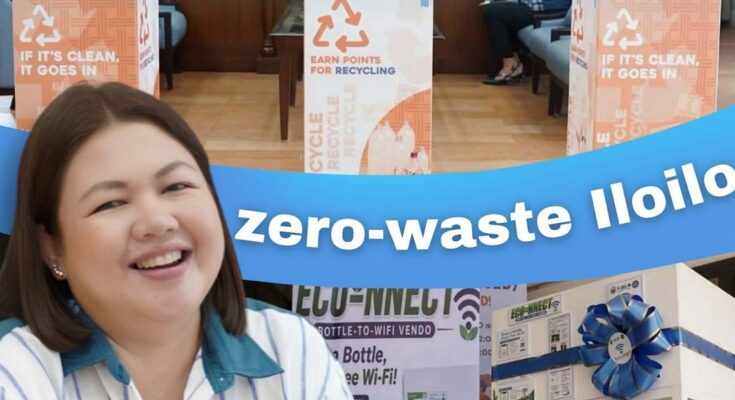
The Iloilo City Government is looking to transform waste into economic opportunities through a proposed circular economy initiative that would establish community-based resource hubs and create green livelihoods while reducing the amount of garbage sent to the landfill.
Mayor Raisa Treñas presented the city’s Circular Citizens Initiative during Module 6B of the Asia-Pacific Mayor’s Academy, highlighting plans to establish pilot Localized Circular Resource Hubs in the districts of Molo and Jaro.
The proposed hubs will initially serve 74 priority coastal and riverine barangays, where waste management is also linked to efforts to prevent plastics and other solid waste from reaching waterways and contributing to flooding.
“Basura na, pangabuhian pa,” Treñas said in sharing the initiative.
According to the mayor, Iloilo City generates around 592 metric tons of solid waste daily, with only about 31 percent currently diverted from disposal.
The city’s 2025 Waste Analysis and Characterization Study also found that about 49 percent of the waste stream consists of organic and biodegradable materials, while recyclable and recoverable materials account for another significant portion.
The initiative comes as the city prepares for the safe closure and rehabilitation of the Calajunan Sanitary Landfill in Mandurriao in 2027. The city has long included waste segregation, recycling, composting and improved materials recovery among its solid-waste management strategies.
Community-based circular hubs
Under the proposal, repurposed solar-powered structures will serve as Localized Circular Resource Hubs where communities can undertake recycling, composting, repair, tool-sharing and refilling activities.
The city also plans to expand a digital platform based on Project Agubay, developed with Central Philippine University, to track waste materials, connect reusable resources with businesses and encourage residents to participate through plastic credits and other incentives.
Treñas said the initiative will prioritize informal waste pickers and waste workers, low-income households, local businesses, and families in communities vulnerable to flooding and waterway pollution.
The city is also seeking to strengthen women’s participation in the circular economy. According to data cited by the mayor, 43.9 percent of informal waste pickers are women. The proposed hubs are targeting at least 50 percent women leadership and equal revenue distribution.
Target: 50% waste diversion
The city is now seeking project-preparation support for feasibility studies, market assessments, engineering designs, digital systems and policies needed to make the initiative investment-ready.
Through the first two pilot hubs, the city aims to connect at least 50 local businesses to the circular economy and work toward a verified 50-percent waste diversion rate.
In the long term, the city intends to expand the model to all 180 barangays of Iloilo City and potentially share the approach with other communities in Western Visayas. Iloilo City’s official government website lists 180 barangays across its seven districts.
“A zero-waste Iloilo City is a shared responsibility,” Treñas said, stressing the need for cooperation among barangays, households, businesses, schools, waste workers, the academe and other partners.
The mayor said the initiative ultimately seeks to turn materials that would otherwise become garbage into useful resources and sources of livelihood while building a cleaner, healthier and more flood-resilient Iloilo City.